How many carbs per hour cycling Z2 vs Z4, a practical guide
For most endurance cyclists, the question of how many carbs to eat per hour during a ride does not have a single right answer. It depends on the intensity, the duration, and what your gut can actually absorb. Get it wrong in either direction and you either bonk, or you sit through stomach distress that ruins the session.
Here is the working framework most pro and elite endurance coaches use, simplified for everyday application.
The basic maths: intensity drives carb need
Your body's fuel mix changes with intensity. At lower power, you burn more fat. As intensity climbs, the contribution from carbohydrate rises, and at threshold and above, carbs are doing most of the work.
ZoneWhat it feels likeCarb burn per hourZ2 (endurance)Conversational pace, sustainable for 4+ hours30 to 60 g/hZ3 (tempo)Hard but controlled, comfortably uncomfortable60 to 80 g/hZ4 (threshold)Sustainable for about an hour max80 to 100 g/hZ5 (VO2+)All-out efforts, minutes at a time90 to 120 g/h
These are not intake targets. They are carb burn rates. Your job is not to match the burn exactly, it is to keep your blood glucose stable enough to keep performing.
So what should you actually eat?
For most amateur and intermediate endurance cyclists:
Rides under 90 minutes: Usually no fuelling needed if your pre-ride meal was solid. Maybe 20 to 30 g if you are going hard.
90 minutes to 3 hours: 40 to 60 g/h is the sweet spot for Z2 to Z3. Bump to 70 to 90 g/h for Z4 efforts.
3+ hours: Aim for 60 to 90 g/h consistently. The longer the ride, the more critical fuelling becomes, and the more you will regret skimping.
For trained athletes who have done the gut work to absorb high carb rates:
Long races and 3+ hour intense efforts: 90 to 120 g/h is normal among pro endurance athletes. This needs gut training. Start at 60 g/h and build over weeks.
Why fixed daily macros fall short
The reason generic nutrition apps do not work well for cyclists is that they treat every day the same. They do not know you did 90 minutes Z2 yesterday and a 4-hour ride with intervals today. The carb need is wildly different on those two days.
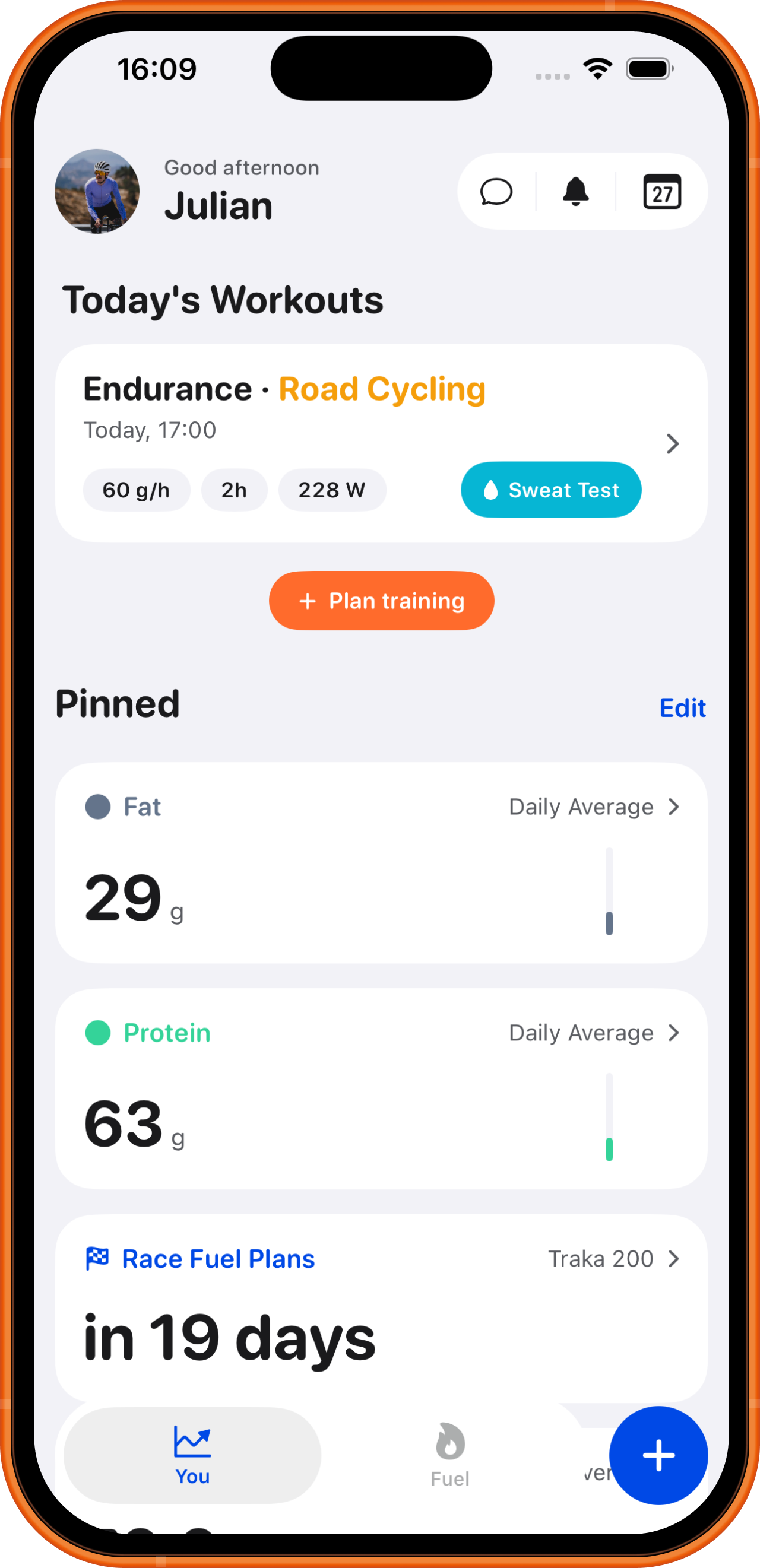
This is why apps that integrate with your training data, like M0VE Nutrition reading from Strava, Intervals.icu, and Apple Health, calculate your daily target by reading what you actually did. Heavy intervals day, your targets go up. Rest day, they drop. You do not have to remember to adjust.
Practical takeaways
Match intensity to intake, not your fitness app's flat daily number. A 4-hour Z4 ride is not the same as a 4-hour Z2 ride.
Train your gut. If you are new to fuelling at over 60 g/h, start at 40 to 50 g/h on long rides and build by 10 g per week.
Practice in training, not in the race. What works on a Sunday long ride is what you will trust on race day.
Carbs matter more than total calories during a session. Total kcal during the ride matters less than carb count. Fat takes too long to oxidise at intensity.
If you want the maths done for you, M0VE gives you a per-session carb target based on the ride you actually planned. Free 14-day trial. Connect your Strava or Intervals.icu and try it.
Put this into practice
MOVE applies these principles automatically, personalised to your sport, weight and training load.
Download M0VE